Your Complete Guide to Planning Your First Cruise Without Stress
Written by Trip Sturtridge — 80+ cruises sailed, years of experience booking travel for us and family.
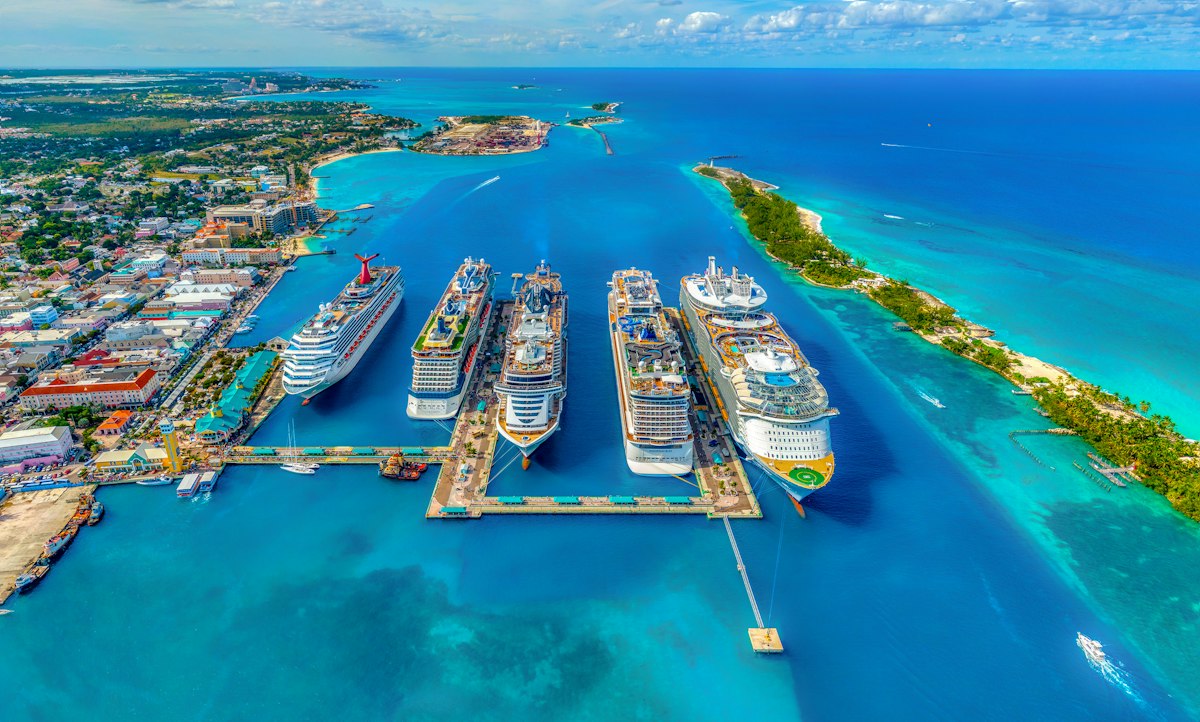
Why Your First Cruise Will Be Your Best Vacation Yet
If you've been on the fence about cruising, I want to share something after sailing on more than 80 voyages: there is simply no other style of vacation that delivers this much variety, value, and sheer ease of travel. You unpack once, wake up in a new destination, and every world-class meal is already paid for. That's not marketing — that's the experience I've watched transform first-time cruisers into lifelong sailors for over two decades.
The modern cruise ship has evolved far beyond the old image of shuffleboard and buffet lines. Today's vessels are floating cities with Broadway-caliber shows, rock-climbing walls, specialty restaurants from James Beard nominees, immersive spa complexes, and enough onboard activities to keep every member of your family busy from sunrise to midnight. And then there's the destination itself — the Caribbean, Alaska, the Mediterranean — places you'd otherwise spend four flights and six hotel check-ins reaching.
The most common thing I hear from first-timers after they disembark? "I had no idea it was going to be like this." That's the cruise experience. And with the right guidance before you go, your first sailing will set a standard that every other vacation will struggle to match.
Choosing Your First Cruise: Destination, Cruise Line, and Ship Size
The single most important decision you'll make is matching yourself to the right cruise. Not every ship is right for every traveler, and not every destination suits every interest. Here's how I walk clients through it.
**Destination First**
For most first-time cruisers, I recommend the Caribbean. Here's why: the weather is reliably warm, the ports are short sailings from Florida departure ports (Port Canaveral, Miami, Tampa), and the combination of beach days, snorkeling, and colorful towns is universally appealing. The Caribbean also has the most sailing options, which means more competitive pricing.
Alaska is a spectacular second choice, particularly if you prefer dramatic natural scenery over beach days. I've sailed Alaska dozens of times and it never fails to deliver — the glaciers, the wildlife, the rainforest of Juneau — it's unlike anything else on earth. If summer is your window and nature is your passion, Alaska belongs on your list.
Europe (Mediterranean) is wonderful but requires more planning around port logistics, flight timing, and cultural expectations. I generally recommend saving Europe for your second or third cruise once you understand how the onboard experience works.
**Cruise Line Personality**
Each cruise line has a distinct culture. Royal Caribbean leans energetic with massive ships and adventure amenities. Carnival skews casual, fun, and family-affordable. Norwegian Cruise Line pioneered freestyle dining and tends to attract a slightly younger crowd. Princess Cruises is more relaxed and destination-focused — a great fit for first-timers who want a refined but not stuffy experience. Celebrity Cruises splits the difference between premium and luxury beautifully.
**Ship Size: What It Means for You**
Large ships (3,000–7,000 passengers) offer the most amenities: multiple restaurants, theaters, pools, water parks, climbing walls. They also mean more people at every port stop and a certain amount of navigating crowds.
Mid-size ships (1,500–2,500 passengers) often represent the sweet spot — plenty of amenities without the overwhelming scale. Small ships (under 1,000 passengers) trade amenity breadth for intimacy and access to smaller ports that larger vessels can't reach.
For most first-timers, I recommend starting on a large or mid-size ship with Caribbean itineraries aboard Royal Caribbean, Carnival, Norwegian, or Princess. You'll maximize your options and give yourself the full experience.
Budget & Pricing: What Your Cruise Actually Costs
One of the biggest misconceptions about cruising is that the price you see is the price you pay. It isn't — and I'd rather you know this upfront than be surprised on embarkation day.
**The Cruise Fare**
The advertised fare typically covers your stateroom, main dining room meals, most ship entertainment, and access to pools and common areas. It does NOT automatically include:
- Gratuities/service charges (typically $16–$20 per person per day) - Drinks (a beverage package usually runs $65–$100 per person per day) - Specialty dining (extra charge, usually $25–$60 per person per restaurant) - Shore excursions (average $75–$150 per person per port) - Wi-Fi (typically $25–$35 per day) - Spa treatments, casino play, onboard photos, gift shops
**Real Budget Planning**
When I help clients set a cruise budget, I use this rule: take the advertised fare and add 40–60% to account for extras. A couple spending $1,200 on their cabin should budget $1,700–$1,900 total to have a comfortable, full-experience trip.
**Ways to Reduce Costs**
Book early (12–18 months out) for the best cabin selection and pricing. Consider booking during wave season (January–March) when cruise lines run their deepest promotions. Look for "all-inclusive" or "drinks-included" deals — Norwegian and Celebrity frequently bundle beverage packages at launch. Consider a slightly older or smaller ship on the same cruise line for significantly lower fares. Travel in shoulder season (late April–May, November) for Caribbean sailings.
**The Value Equation**
Even accounting for extras, cruises routinely deliver more value per dollar than land-based vacations of equal length. When I compare a 7-night Caribbean cruise for two against a comparable 7-night land trip — flights, hotels, restaurants, activities — the cruise wins on value almost every time.
Booking & Documentation: Getting Everything Right
**When to Book**
The best pricing windows for most Caribbean cruises are 9–12 months before departure. That said, last-minute deals (within 60–90 days) can offer tremendous savings if you have flexibility — but cabin selection will be limited.
**Working With a Travel Advisor**
Here's something I've watched play out hundreds of times: travelers who book directly with cruise lines pay the same price but get none of the expertise, advocacy, or ongoing support that a travel advisor provides. When the ship itinerary changes, when a stateroom floods at 2 AM in Nassau, when you need to adjust gratuities or dining reservations — having a dedicated advisor who knows the cruise line's internal contacts is worth far more than any perceived savings from booking direct.
**Documentation You'll Need**
For Caribbean cruises departing from U.S. ports: U.S. citizens can sail with a valid U.S. passport OR a passport card OR a WHTI-compliant document (enhanced driver's license in some states). However, I strongly recommend a full passport for every international trip. If you miss your ship at a foreign port and need to fly home, only a full passport will get you there without catastrophic complications.
Non-U.S. citizens should check documentation requirements based on their citizenship and the itinerary's ports of call — requirements vary significantly.
**Travel Insurance**
This is non-negotiable for me. I've seen too many clients lose $4,000–$10,000 because they skipped the $150–$300 travel insurance policy. Look for comprehensive coverage that includes trip cancellation, medical evacuation, and trip interruption. The cruise line's own insurance is often adequate but always compare it against third-party options — you'll frequently get better medical coverage elsewhere.
Packing Essentials for Your First Cruise
**The Golden Rule of Cruise Packing: Less Is More**
Stateroom closets are compact. I've watched first-time cruisers arrive with four enormous suitcases and spend half the trip rearranging luggage. The goal is to pack everything you need in bags that fit easily under the bed or in the closet.
**What to Bring**
Formal/Smart Casual attire: Most mainstream cruise lines have at least one formal night or "elegant" evening per 7-night sailing. Men: a blazer and slacks at minimum, a suit or tuxedo for a truly formal line like Cunard. Women: a cocktail dress or dressy pantsuit. Don't skip this — the formal dinner photos are among the best memories from any sailing.
Casual daywear: Shorts, t-shirts, sundresses, swimsuits. For every day at sea or a beach port, pack light and comfortable. Two swimsuits so one can dry overnight.
Layers: Ships are aggressively air-conditioned indoors. A light cardigan or hoodie is essential even on a Caribbean sailing.
Comfortable walking shoes: You'll walk more than you expect — both on the ship and exploring ports. One pair of athletic shoes and one pair of sandals covers most situations.
**What Not to Pack**
Irons (not allowed — use the laundry service), full-size toiletries (you'll find them in your stateroom), and excessive formal wear. Most items you might forget can be purchased on the ship (at a premium) or at ports.
**Day Bag for Ports**
Pack a small daypack or tote for port days: reef-safe sunscreen, a refillable water bottle, camera, power bank, a photocopy of your passport, ship card, and any medication you might need. Keep cash in multiple denominations.
See our complete [cruise packing checklist](/blog/cruise-packing-checklist) for the full list organized by category.
Onboard Tips & Etiquette Every First-Timer Should Know
**Embarkation Day**
Arrive at the cruise terminal during your assigned boarding time — not before. Most ships assign staggered boarding to reduce congestion. Your stateroom may not be ready until 1:00–2:00 PM, but you can explore the ship, grab lunch at the buffet, and start your vacation immediately.
**Dining**
Modern cruise ships offer two primary dining formats: Traditional Dining (assigned table, set times — 6 PM early or 8:30 PM late) and My Time/Freestyle Dining (open seating, reserve as you go). For first-timers, I prefer traditional dining — you meet the same tablemates and servers each night, which creates genuine connections and a familiarity that enriches the experience.
The main dining room serves multi-course dinners at no extra charge. Take advantage of it. The food quality varies by line, but you can always order extra or try dishes you wouldn't normally.
**Gratuities**
Most lines add service charges automatically to your account ($16–$20 per person per day). These are split between your cabin steward, dining room team, and behind-the-scenes crew. Please don't remove them — these are people's livelihoods.
**Sea Days**
Don't underestimate sea days. They're often my favorite part of any cruise. No schedule, no rushing. Sleep late, find a deck chair with a view, read, join a trivia game, explore every corner of the ship. The temptation is to fill sea days with every activity on the schedule — resist it.
**Port Etiquette**
Return to the ship by the "all aboard" time — always 30–60 minutes before departure. The ship will leave without you if you're late. Use either ship-organized excursions (more expensive but the ship waits) or independent tours from trusted local operators.
Common First-Time Cruise Mistakes to Avoid
After guiding hundreds of first-time cruisers, these are the mistakes I see most frequently:
**Skipping travel insurance.** Already mentioned, bears repeating. The question is never "will anything go wrong?" — it's "what will go wrong, and am I covered?"
**Over-scheduling every port.** The temptation to pack every port stop with tours, excursions, and restaurants leads to exhaustion. Leave space. Some of my best port memories are wandering without a plan, finding a local cafe, watching the harbor.
**Ignoring the main dining room in favor of specialty restaurants every night.** Specialty dining is wonderful — but so is the main dining room, especially once you have your regular table and server who knows your preferences by Day 3.
**Not pre-purchasing shore excursions.** Popular excursions sell out weeks before departure. Book what matters to you at the time of cruise booking, not the week before you sail.
**Underestimating seasickness.** If you've never sailed, consult your doctor before departing. Sea-Bands, Dramamine, Bonine, and scopolamine patches all work — but you want them before you need them, not after.
**Booking the cheapest inside cabin when a slightly upgraded cabin would transform the trip.** For a first cruise, consider at minimum an ocean-view cabin. The natural light alone changes how you feel after 7 days.
See our full article on [25 cruise mistakes to avoid](/blog/cruise-mistakes-avoid) for a more detailed treatment.