Mediterranean Cruise Ports Guide
The essential guide to the Mediterranean's most iconic cruise ports — what to see, what to skip, and how to make the most of every day in port
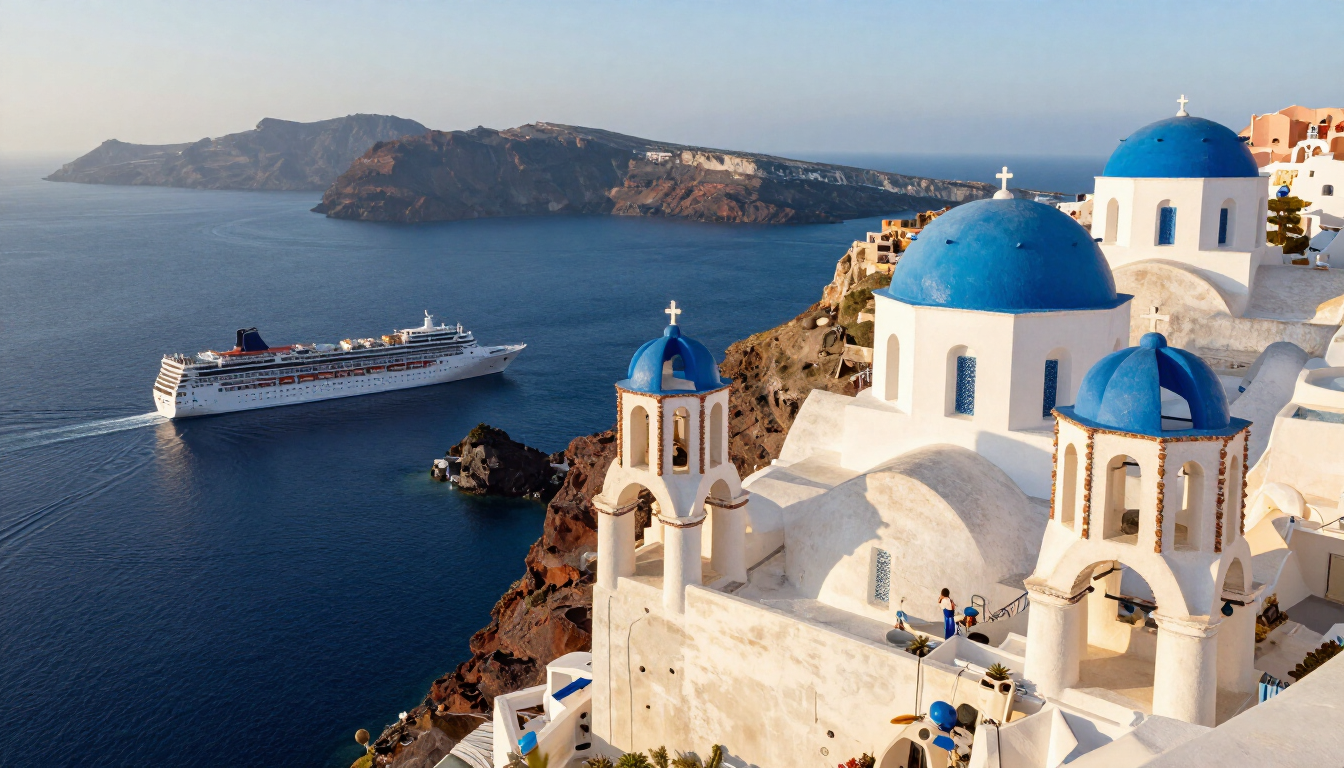
The essential guide to the Mediterranean's most iconic cruise ports — what to see, what to skip, and how to make the most of every day in port
The Mediterranean is where cruising grew up. Before Caribbean mass-market itineraries existed, before Alaska expedition voyages, before private island days in the Bahamas — there were European sailings calling at the ancient ports of Greece, Italy, Spain, and Croatia, carrying travelers who wanted to experience in one voyage what might otherwise take a month of separate European trips to see. Today, the Mediterranean remains the most culturally layered, historically dense, and visually extraordinary cruise destination on the planet. This guide is built from direct experience — we have sailed Mediterranean itineraries on multiple cruise lines, visited these ports repeatedly, and developed strong views about how to spend each day ashore.
Planning the Right Mediterranean Itinerary
Mediterranean cruise itineraries typically fall into three geographic categories: Western Mediterranean (Barcelona, Marseille, Rome, Florence/Livorno, Cinque Terre, Monte Carlo); Eastern Mediterranean (Athens/Piraeus, Santorini, Mykonos, Kusadasi/Ephesus, Istanbul, Rhodes); and a combination that covers both. Most 7-night itineraries focus on one region. 10–12 night sailings can bridge both, though you'll have fewer days at each port. For first-time Mediterranean cruisers, we recommend choosing one region rather than a rushed overview of both.
The best ship for Mediterranean cruising depends on your priorities. Small luxury ships (Silversea, Seabourn, Oceania) access tiny harbors and anchorages that mega-ships cannot — think lesser-known Amalfi Coast villages, small Croatian islands, and hidden Corsican coves. Mid-size and larger ships (Celebrity, Princess, MSC) deliver the full Mediterranean port circuit at accessible fares with strong onboard programming. If you haven't settled on a cruise line yet, our <a href="/blog/how-to-choose-the-right-cruise-line" class="text-gold hover:text-gold/80 underline underline-offset-2 transition-colors">complete cruise line comparison guide</a> includes a dedicated section on which lines handle the Mediterranean most effectively.
Rome and Civitavecchia: The Full Day in the Eternal City
Ships calling in Rome actually dock at Civitavecchia, a port city about 90 minutes by train or an hour by private transfer from central Rome. This logistics reality is the most important planning factor for your Rome day. If you want the Vatican, the Colosseum, the Roman Forum, the Trevi Fountain, and a lunch in Trastevere all in one day — and many travelers do — you need a private car or guide rather than a cruise line coach tour, which typically spends 30–40 minutes on each site and leaves little room for genuine exploration.
Our strong recommendation: book a private guide for Rome. A knowledgeable local guide can get you into the Vatican's Sistine Chapel via a priority entrance that bypasses the two-hour public queue, navigate you between sites efficiently, and take you to a neighborhood trattoria for lunch that no bus tour visits. The cost difference between a private guide and a cruise line group tour is real but modest — and the experience difference is extraordinary. Pre-book through your travel advisor, who can coordinate guaranteed return timing to align with the ship's departure.
Santorini: Managing the Most Beautiful and Most Crowded Port
Santorini is without question the most photographed port in the Mediterranean and one of the most genuinely stunning destinations on Earth. The caldera views from Oia and Fira — the whitewashed villages clinging to the volcanic cliff above the deep blue water, the iconic blue-domed churches glowing in the Aegean sun — are as extraordinary in person as in every photograph you've seen.
The challenge: Santorini in cruise season is genuinely overwhelmed by visitors. In July and August, multiple large cruise ships anchor simultaneously in the caldera, sending thousands of tender passengers ashore at a time. The famous Oia sunset — which draws enormous crowds even on off-season days — becomes a wall-to-wall experience that can feel more like a theme park than a Greek island village. The tender system during peak season can mean waiting 45–60 minutes each way, significantly compressing your actual time ashore.
The strategy: go early. The first tender of the day (typically 8:00–8:30 am) lands you in Fira before the crowds build. Hire a private driver to take you to Oia before 9 am for morning photography with few other visitors, then work your way south through the villages during the mid-morning. Be back aboard before 1 pm if possible to avoid the peak tender congestion. Alternatively, if your itinerary includes a Santorini overnight — available on some luxury line programs — an evening in Oia after the day-tripper crowds depart is a completely different experience. For couples considering Santorini as part of a honeymoon itinerary, our <a href="/travel/honeymoon-travel" class="text-gold hover:text-gold/80 underline underline-offset-2 transition-colors">honeymoon travel guide</a> includes specific recommendations for pairing a Mediterranean cruise with a pre- or post-cruise Santorini hotel stay.
Barcelona: The Perfect Embarkation City
Barcelona is one of the great cruise embarkation cities in the world — and it is absolutely worth arriving 2–3 days early to experience before your sailing begins. The city's port is walkable from Las Ramblas and the Gothic Quarter, the food scene is extraordinary, and the architecture — Gaudí's Sagrada Família, Park Güell, Casa Batlló — is unlike anything else in Europe.
If Barcelona is both your embarkation and your first port day, prioritize the Sagrada Família above everything else — book timed entry tickets well in advance (they sell out weeks ahead). The Gothic Quarter and El Born neighborhood require only comfortable shoes and half a day of wandering. The Boqueria market is worth a morning visit for breakfast, though it has become significantly more tourist-oriented in recent years — consider the adjacent Santa Caterina Market as a quieter alternative.
Athens and Piraeus: Gateway to Ancient Greece
Athens is the Eastern Mediterranean equivalent of Rome — the ship docks at Piraeus, the port city of Athens, approximately 12 kilometers from central Athens and the Acropolis. The journey is straightforward by metro (about 30 minutes, inexpensive) or by private transfer (20–25 minutes). Unlike Rome, Athens is compact enough that the Acropolis, the Acropolis Museum, and a neighborhood lunch in the Plaka are genuinely achievable in a full port day without feeling rushed.
The Acropolis itself — the Parthenon, the Erechtheion, the Propylaea — is the most significant archaeological site in the Western world, and seeing it in person is a different experience from any photograph or description. Arrive as early as the site opens (typically 8 am in summer) to see the Parthenon before midday crowds and before the Aegean sun turns the marble into a furnace. The Acropolis Museum directly below the hill is one of the finest archaeological museums in Europe and deserves at least 90 minutes separately from the site visit.
Dubrovnik: The Walled City and How to Beat the Crowds
Dubrovnik's Old Town — a perfectly preserved medieval city enclosed within limestone walls on a promontory above the Adriatic Sea — is a UNESCO World Heritage Site and one of the most architecturally remarkable places in Europe. It is also significantly over-touristed in peak season, with multiple cruise ships discharging thousands of passengers into a walled city that was designed for a medieval population.
The strategy that works: walk the city walls first thing in the morning, before 9 am if your ship docks early enough. The walls circuit (approximately 2 km, 1–2 hours) provides the most dramatic views of the city, the sea, and the surrounding islands, and is far more enjoyable before the heat and crowds build. After the walls, explore the Stradun (the main pedestrian street) and the side streets of the Old Town. Consider a short boat taxi to the island of Lokrum just offshore for lunch and swimming away from the main tourist flow. By early afternoon, Dubrovnik's heat and crowds peak — a good time to return to the ship's air conditioning and pool deck.
Florence, Pisa, and the Tuscany Port Day
Ships visiting Florence dock at Livorno, approximately 1.5 hours from Florence by coach or 1 hour by private transfer. This is one of the longest port transfers in the Mediterranean, which means your timing strategy requires care. A Livorno port day gives you roughly 5–7 hours in Florence — enough for the Uffizi Gallery (pre-book well in advance; skip-the-line is essential), the Duomo exterior and Baptistery, and a lunch in the Oltrarno neighborhood across the Arno. It is not enough to do both Florence and Pisa in the same day unless you skip the Uffizi entirely.
Our recommendation: commit fully to Florence. It is one of the greatest art cities in human history, and a compressed itinerary that tries to add Pisa will leave you feeling that you rushed both. The Leaning Tower of Pisa is genuinely impressive in person — but the Uffizi's Botticelli rooms, Michelangelo's David at the Accademia (also pre-book), and an afternoon coffee at Caffè Rivoire in Piazza della Signoria are experiences that reward the full day's commitment.
How to Decide: Ship vs. Shore on Sea Days and Beyond
Not every port day requires going ashore. This is a perspective most first-time Mediterranean cruisers don't have, and it's worth building into your planning. After 4–5 consecutive port days of intensive sightseeing, a rest day on the ship — using the pool, the spa, and the quiet of a ship that has partially emptied into port — is often exactly what's needed. Some ports on typical Western Mediterranean itineraries (Marseille, Ajaccio in Corsica, La Spezia for Cinque Terre access) are genuinely worthwhile for some travelers and skippable for others depending on their interests.
A good cruise advisor helps you prioritize your port days before you sail — identifying the two or three ports that absolutely require your full energy and planning, and the ones where a leisurely ship day or a casual local exploration might serve you better. If you're planning your first Mediterranean sailing and want help building the right shore excursion strategy, <a href="/schedule-consultation" class="text-gold hover:text-gold/80 underline underline-offset-2 transition-colors">a free consultation with Trip or Cindy</a> is the most efficient use of 20 minutes in your planning process. We have walked every port on this list multiple times.
For travelers departing from Florida who are considering a Mediterranean itinerary, our <a href="/services/cruise-travel-agent-florida" class="text-gold hover:text-gold/80 underline underline-offset-2 transition-colors">Florida cruise travel agent team</a> handles the full logistics — international flights, pre-cruise hotel stays in Barcelona or Rome, available hotel perks when eligible at your embarkation-city property, and shore excursion coordination at every port — so your Mediterranean vacation begins the moment you arrive in Europe.