Luxury Cruise Lines: What Sets Them Apart
Inside the world of ultra-luxury cruising — small ships, all-inclusive fares, and the experience that changes everything
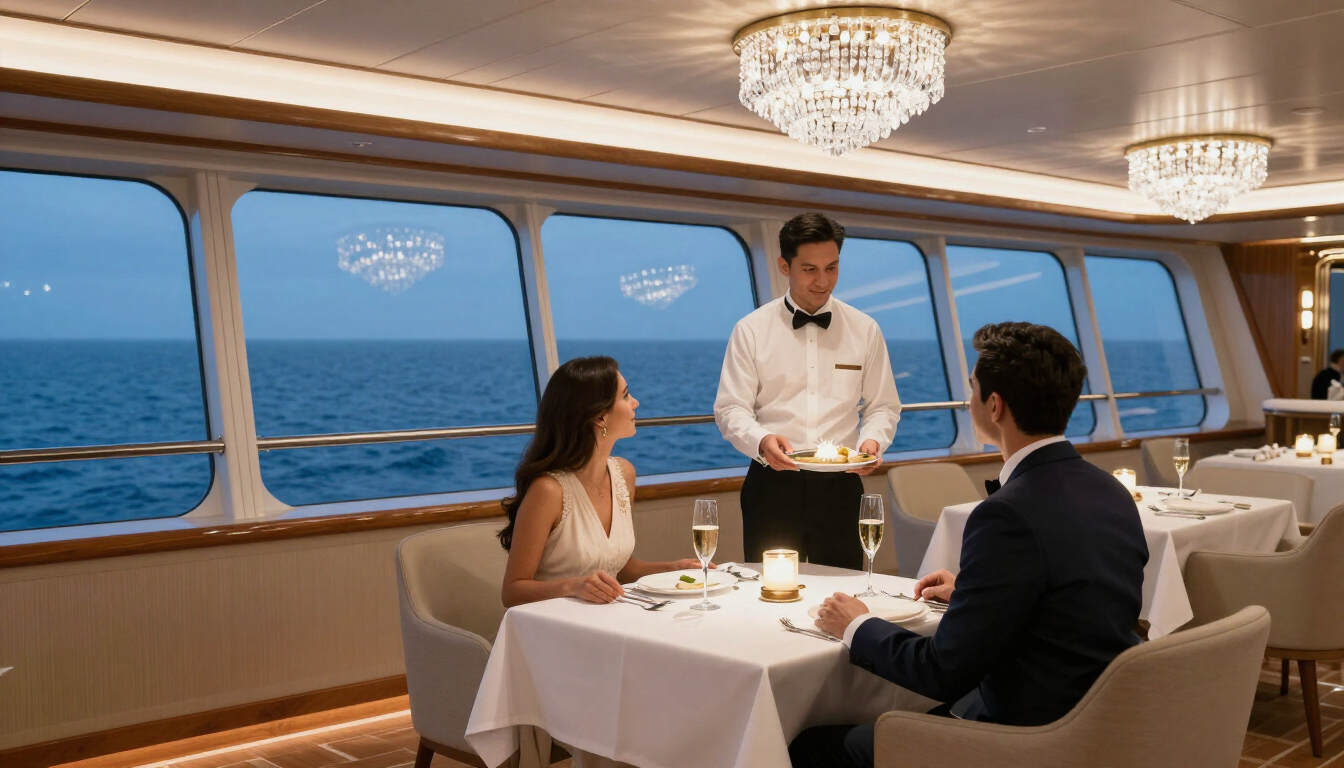
Inside the world of ultra-luxury cruising — small ships, all-inclusive fares, and the experience that changes everything
Most travelers who have never sailed a luxury cruise line assume the difference is mainly cosmetic — nicer finishes, fancier menus, a slightly more attentive crew. Having sailed both the mainstream and luxury tiers across dozens of voyages, we can tell you that the difference goes far deeper than that. Luxury cruising is a genuinely different category of travel, not just a premium upgrade. The ship size, the crew-to-guest ratio, the food philosophy, the itinerary philosophy, and the entire atmosphere aboard are structurally different from the mass-market experience. This guide explores what those differences actually are, what you're paying for, and how to decide whether the luxury tier is right for your next voyage.
Ship Size: The Foundation of Everything
The most fundamental difference between luxury and mainstream cruising is the size of the ship. Royal Caribbean's Icon of the Seas carries approximately 7,600 passengers. Carnival's newest ships accommodate 6,500. Norwegian's largest ships top 4,000. Compare this to the luxury tier: Silversea's Silver Muse carries 596 guests. Seabourn's Seabourn Ovation carries 604. Regent's Seven Seas Splendor carries 750. Oceania's Riviera carries 1,250 — which would be considered enormous in the luxury segment.
Ship size drives everything else. A 600-passenger ship means meaningful crew-to-guest ratios: Silversea, Seabourn, and Regent consistently deliver approximately one crew member for every guest. That ratio is physically impossible at 6,000-passenger scale. It means your cabin steward knows your name. Your preferred waiter is in the same restaurant every night. Your butler — yes, most luxury ships have butler service in every cabin — anticipates what you need before you ask. The personalization that defines luxury hospitality is a function of that ratio, not just intent.
All-Inclusive: Understanding True Value
Luxury cruise fares are dramatically higher per night than mainstream lines — Silversea and Regent typically run $700–$2,000 per person per day depending on the itinerary and cabin category, compared to $150–$400 on a mainstream ship. But the comparison isn't apples-to-apples. Luxury cruises are genuinely all-inclusive in a way that mainstream cruises are not.
On a Regent Seven Seas sailing, your fare includes: round-trip business-class airfare (on many itineraries), all shore excursions (every port, every day), all specialty dining (every restaurant, every night, no upcharge), all beverages including premium wines and spirits, gratuities, and onboard spending credit. When you calculate what these items would cost added to a mainstream fare — shore excursions alone can run $100–$200 per person per port, and a full-ship beverage package on Royal Caribbean runs $80–$110 per person per day — the luxury price gap often narrows to a premium of 20–40% over a truly comparable mainstream experience. A <a href="/services/why-use-a-travel-advisor" class="text-gold hover:text-gold/80 underline underline-offset-2 transition-colors">experienced travel advisor</a> can model this math for your specific itinerary and show you exactly where the value lines cross.
Dining: Where Luxury Cruising Truly Shines
If there is one area where luxury cruise lines most conclusively outperform the mainstream, it is food. This is not about nicer plating or a longer wine list — it is about the fundamental philosophy behind the culinary program. Luxury lines approach dining the way a Michelin-starred restaurant does: fresh ingredients sourced in port where possible, preparations made to order rather than in industrial volume, and menus that change based on what's available rather than a fixed rotation designed for 6,000 diners.
Oceania Cruises has built its entire brand identity around its culinary program. Their partnership with the Culinary Institute of America, their in-port sourcing policy (the ship's chef shops the local market in ports like Marseille, Valletta, and Istanbul), and their open-seating dining in multiple restaurants with no fixed schedules produce a dining experience that genuinely rivals fine land-based restaurants. We have eaten in Oceania's Polo Grill and Jacques restaurant multiple times and ranked both among the finest meals of any vacation.
Seabourn's partnership with chef Thomas Keller — the man behind The French Laundry — has brought his menus and philosophy to their Restaurant 2 aboard select ships. Having a Thomas Keller menu preparation at sea, with open water as far as the eye can see through the floor-to-ceiling windows, is an experience that is difficult to describe to someone who hasn't done it.
Itineraries: Where Small Ships Go That Big Ships Can't
A 7,600-passenger ship requires a major port infrastructure to dock — deep water, long piers, large tender facilities, and nearby tourist infrastructure to absorb thousands of visitors simultaneously. This confines mega-ships to a circuit of well-worn ports: Nassau, Cozumel, Juneau, Santorini (with hours-long tender queues), and Dubrovnik. There's nothing wrong with those ports. But a 600-passenger luxury ship can access destinations that are simply off-limits to the mainstream fleet.
Silversea's expedition ships reach the Antarctic Peninsula, the Galapagos Islands, Svalbard in the Arctic, and Komodo Island in Indonesia — places where the wildlife is the destination and the experience is genuinely impossible to replicate any other way. Their Silver Endeavour carries a fleet of Zodiac landing craft that allow guests to wade ashore directly on beaches where penguin colonies outnumber humans. Seabourn's port selection in the Mediterranean includes tiny Corsican coves, Montenegrin fjords, and Greek island harbors where their smaller ships are the only vessels in sight. The itinerary access is one of the most genuinely differentiated advantages of the small-ship luxury tier.
If a Mediterranean itinerary interests you, our <a href="/cruises/mediterranean-cruises" class="text-gold hover:text-gold/80 underline underline-offset-2 transition-colors">Mediterranean cruise planning guide</a> compares both mainstream and luxury options for the region and helps you identify which sailing style matches your priorities.
The Service Culture: What It Actually Feels Like
Every cruise line claims exceptional service in their marketing. The difference on a luxury ship is that the service is structural rather than aspirational — it's the result of that crew ratio, extended contracts that build real familiarity, and a crew culture that treats guests as individuals rather than a volume to be processed.
On Seabourn, the crew learns your name within the first 24 hours of boarding — not just your cabin steward but the barista, the pool deck attendant, the sommelier. By day three of a typical sailing, waitstaff at your preferred restaurant have noted your wine preferences, your dietary restrictions, and your seating preferences without you having to repeat them. This isn't magic — it's the result of a crew-to-guest ratio that makes genuine attention possible.
Butler service in every cabin (standard on Silversea, Seabourn, and Regent) adds another layer. Your butler handles specialty restaurant reservations, unpacks luggage if you wish, arranges in-suite dining whenever you want it, coordinates shore excursion logistics, and is reachable by phone around the clock. These are not services you need every day — but the option is always there, and it fundamentally changes how effortless the vacation feels.
Who Is Luxury Cruising Right For?
Luxury cruising is not for everyone — and that's not a commentary on income level alone. Travelers who thrive in high-energy, activity-packed environments with large social scenes often find small luxury ships too quiet. If your ideal cruise involves a wave pool, a FlowRider surf simulator, and 4,000 fellow travelers to socialize with, the intimate atmosphere of a 600-passenger luxury ship may feel sedate.
For honeymoon travelers specifically, the luxury tier is worth serious consideration. Our <a href="/travel/honeymoon-travel" class="text-gold hover:text-gold/80 underline underline-offset-2 transition-colors">honeymoon travel planning guide</a> includes specific luxury cruise recommendations for couples, including the itineraries and ships that consistently deliver the most romantic experiences.
Getting the Best Value on a Luxury Cruise
Luxury cruise lines release their best pricing and cabin selection 12–18 months in advance. Voyages that are likely to sell out — Alaska expedition itineraries on Silversea's Silver Endeavour, Regent's most popular Mediterranean programs, Seabourn's Thomas Keller sailings — should be considered and booked as early as possible. Last-minute deals on luxury ships are rarer and typically limited to inside or entry-level cabin categories.
Working with a well-connected advisor is particularly impactful in the luxury tier. Preferred-partner relationships with Silversea, Regent, Seabourn, and Oceania unlock amenities — typically $300–$800 in onboard credit per cabin, complimentary excursion tours, cabin upgrades at embarkation, and exclusive cocktail parties or private experiences — that are not always available when booking directly or through an unaffiliated agency. The value of these amenities on a 10-night luxury sailing can easily represent 5–10% of the total fare. <a href="/schedule-consultation" class="text-gold hover:text-gold/80 underline underline-offset-2 transition-colors">Book a free consultation with Trip or Cindy</a> to discuss which luxury lines and sailings align with your specific travel goals.