First-Time Cruiser Guide: Everything You Need to Know Before You Book
The complete guide for first-time cruisers — choosing a ship, booking a cabin, nailing embarkation, understanding dining and gratuities, and making your first cruise extraordinary
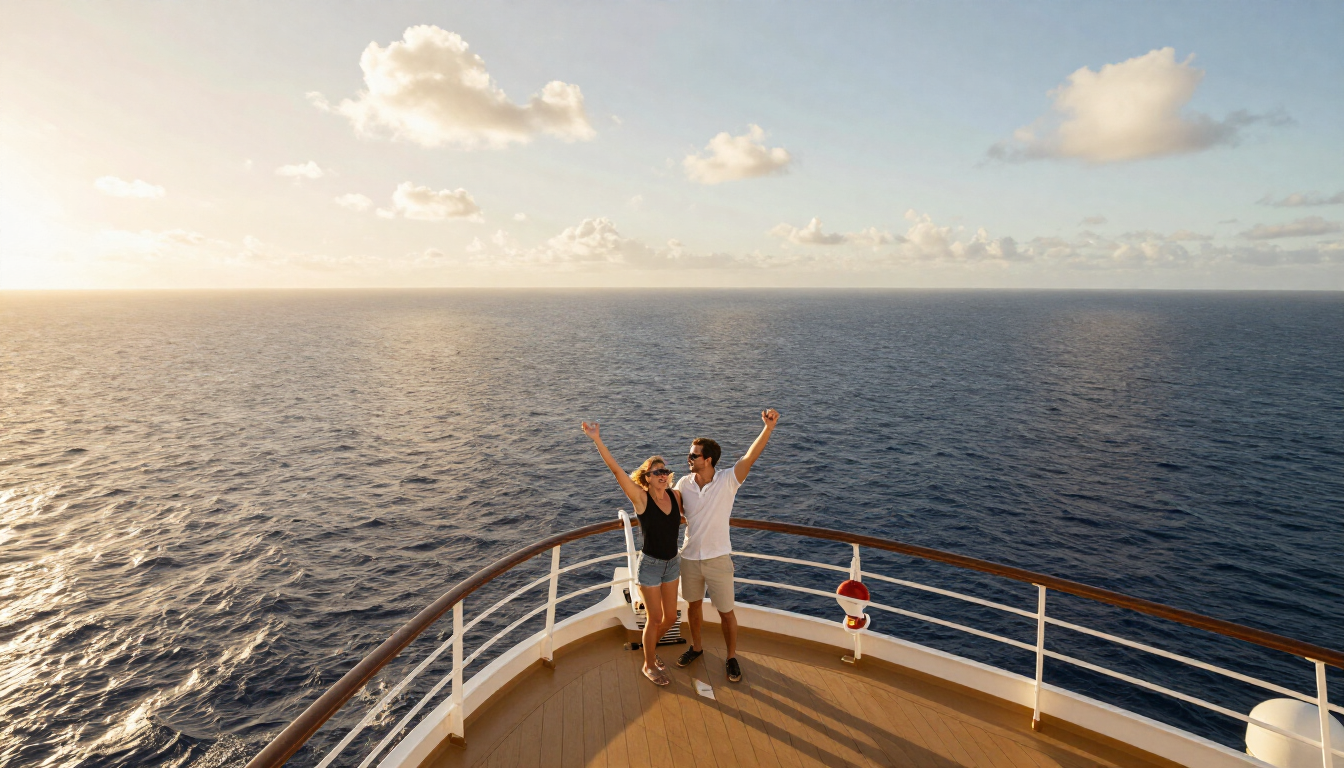
The complete guide for first-time cruisers — choosing a ship, booking a cabin, nailing embarkation, understanding dining and gratuities, and making your first cruise extraordinary
First-time cruisers consistently say the same thing after they return: "I had no idea it would be like this." Sometimes that is a positive surprise — the scale of the ship, the quality of the food, the way waking up in a new destination every day feels. Sometimes it is a frustration that could have been avoided — confusion at embarkation, missing a shore excursion that sold out, choosing the wrong cabin, or not understanding how gratuities and onboard spending work. After more than 80 personal cruises, Cindy and I have made most of the first-timer mistakes ourselves and helped hundreds of travelers avoid them. This guide gives you the full picture before your first cruise, so you arrive at the pier informed, confident, and ready to enjoy every part of the experience.
Cruise Vocabulary: The Terms You Need to Know
Cruising has its own vocabulary, and knowing the basic terms prevents confusion during embarkation and throughout the voyage. The "bow" is the front of the ship; the "stern" is the rear. "Port" is left when facing forward; "starboard" is right. "Embarkation" is boarding the ship; "disembarkation" is departing. A "tender" is a small boat used to ferry passengers ashore when the ship cannot dock directly at a port — tender processes take 30–45 minutes and are worth understanding before your first tender day.
"Muster drill" is the mandatory safety briefing that occurs before the ship departs on embarkation day — modern cruise ships use an e-muster system where you watch the safety video on your phone or cabin TV and check in at your designated muster station (a 5-minute process). A "sea day" is a full day spent sailing without a port stop — many experienced cruisers love sea days for the peace and onboard activities; first-timers sometimes underestimate how much they will enjoy them. The "Lido deck" refers to the pool and outdoor deck area, typically on an upper deck.
Choosing the Right Cruise Line for a First Timer
The single most important decision in first-cruise planning is choosing the right cruise line — not the right ship, not the right itinerary, and not the right cabin. The cruise line determines the overall atmosphere, the level of formality, the dining experience, the entertainment style, and the demographic mix onboard.
For most first-time cruisers, Royal Caribbean or Carnival provides the broadest range of onboard activities, the most departures from major US ports, and the most accessible price points. Norwegian is excellent for travelers who find the idea of fixed dining times restrictive.
Choosing the Right Ship
Within each cruise line, ship size matters enormously. Large ships (3,000+ passengers) have more amenities — waterparks, multiple dining venues, theaters, spas — but also longer lines, more crowded pools, and a more resort-like feel. Smaller ships have a cozier atmosphere, better staff-to-passenger ratios, and often access smaller, more exclusive ports.
For a first cruise, a mid-to-large ship on a mainstream line is usually the ideal starting point. You'll have enough to explore to fill sea days, the itineraries are well-traveled and easy to navigate, and the infrastructure for handling first-timers (clear signage, helpful staff, well-organized excursions) is excellent.
Booking Your Cabin
The four cabin types — inside, ocean view, balcony, and suite — represent a significant range in both price and experience. For a first cruise, we generally recommend a balcony cabin if budget allows. The ability to step outside in the morning, watch a port approach from private outdoor space, or sit with a coffee while the ship moves through the early morning ocean is a genuinely distinctive cruise experience that's impossible to replicate from an inside cabin.
If budget is the primary constraint, an inside cabin is a perfectly sound choice. First-time cruisers are often surprised by how little time they actually spend in the cabin — you're up and exploring most of the day. Just choose midship, on a middle deck, away from obvious noise sources (pool deck above, nightclub below).
Embarkation Day: What to Expect
Embarkation day can be chaotic if you're not prepared — or smooth and exciting if you know what's happening. Here's the sequence:
Dining on a Cruise Ship
Modern cruise ships have a dizzying number of dining options. Here's how to navigate them:
The main dining room (MDR) is the most formal onboard dining option and usually operates on either traditional (fixed seating times — early around 6 PM, late around 8:30 PM) or anytime dining (arrive within a window, be seated when space is available). Traditional seating builds a community — you have the same table and the same servers every night, and relationships develop over the sailing. Anytime dining offers more flexibility. Both options are included in your cruise fare.
The buffet operates breakfast, lunch, and often lunch on sea days. It's casual, informal, and abundant — typically with multiple themed stations. Don't judge the cruise by buffet quality alone; the main dining room is a meaningfully different experience.
Most ships have 3–8 specialty restaurants with an additional per-person cover charge ($25–$60 typically). These include steakhouses, Italian trattorias, sushi bars, and other concepts. The quality is genuinely higher than the main dining room on most ships. We recommend booking specialty restaurants for one or two evenings on a 7-night sailing — they add meaningfully to the experience without adding significantly to the total cost.
Understanding Your Onboard Account
Cruise ships are nearly cashless environments. Everything you purchase aboard — drinks, specialty dining, spa services, shore excursions, photos, casino chips, boutique purchases — charges to your "folio" (onboard account), which is settled at the end of the cruise. You register a credit card at embarkation, and the final balance is charged automatically when you disembark. Set a spending limit before you sail, because onboard charging is easy to lose track of.
Gratuities: How They Work
Gratuities on cruise ships are typically charged automatically to your onboard account — usually $16–$20 per person per day, depending on the cruise line and cabin category. This covers your cabin steward, dining room servers, and other service staff. It does NOT cover specialty restaurant servers, bar staff (bar gratuity is usually added automatically to drink orders), or spa staff.
Some cruise lines include gratuities in the fare for certain booking promotions. Others offer a "prepay gratuities" option at the time of booking that locks in the current rate. You can adjust gratuities at guest services during the cruise, but we recommend leaving the standard amount — the crew's income depends on it.
Wi-Fi on a Cruise Ship
Cruise ship Wi-Fi has improved dramatically in the past five years, but it's still slower and more expensive than most travelers expect. Packages are priced by the day or for the full sailing, and they're often cheaper to purchase before you board than onboard. Video streaming is usually limited or prohibited on the lower-tier packages.
Our advice: for most travelers on a 7-night cruise, the mid-tier package is sufficient for messaging and light social media. If you genuinely need to work during the cruise, the highest-tier package is worth the investment. If you want to actually disconnect — and many travelers find cruises are their best opportunity to do so — skip the Wi-Fi entirely and use port Wi-Fi for necessary communication. For a full walkthrough of cellular service, airplane mode, and Wi-Fi calling at sea, see our <a href="/blog/using-cell-phone-on-cruise-ship" class="text-gold hover:text-gold/80 underline underline-offset-2 transition-colors">cell phone on a cruise ship guide</a>.
Drink Packages: Are They Worth It?
Drink packages are the most-asked-about add-on for first-time cruisers. They range from non-alcoholic packages (sodas, specialty coffees, juices) to unlimited alcoholic beverages. Pricing runs $50–$110 per person per day for full alcohol packages.
The math: if you'd naturally drink 5+ cocktails, wine, or beer per day, the package pays off. For moderate drinkers (2–3 drinks per day), it usually doesn't. For non-drinkers, there's often a non-alcoholic package that covers coffees and specialty beverages. Cruise lines typically require all adults in the same cabin to purchase the same package tier — you can't have one person on the alcohol package and another on nothing.
Shore Excursions: Ship vs. Independent
Every port day offers a choice: book excursions through the cruise line, book independently with a local operator, or explore on your own. Each approach has merits.
Sea Days: How to Enjoy Them
Sea days — days at sea between ports — are one of the most underappreciated parts of cruising. The pool opens early, the shows and lectures are scheduled, the spa runs promotions, and the whole ship has a relaxed Sunday-morning quality. First-time cruisers sometimes feel like they're "wasting" a sea day; experienced cruisers often prefer more of them.
Pro tip: reserve sunbeds early on sea days — first-come, first-served, and the good spots near the pool go fast. Walking or jogging the upper deck in the morning before breakfast is one of the best things on a ship; the views are spectacular and the deck is quiet.
Dress Code: What to Actually Pack
Cruise dress codes range from completely casual (Carnival) to formal (Cunard's Queen Mary 2) with most mainstream lines occupying a middle ground. On a typical 7-night Caribbean sailing on Royal Caribbean, Norwegian, or Celebrity, most nights are "smart casual" — clean slacks or jeans and a collared shirt for men, a sundress or blouse for women. One or two nights are designated "formal" or "elegant evening" — a blazer or suit jacket for men and a cocktail dress for women, though enforcement is rarely strict on modern mainstream lines. Pool and lido areas are casual throughout.
The packing mistake most first-timers make is overpacking formal wear and underpacking comfortable walking shoes. Shore excursion days often involve significant walking on uneven surfaces — Rome's cobblestones, Alaskan boardwalks, Caribbean beach paths. Good comfortable walking shoes are the most important item on your packing list. For a complete breakdown, our <a href="/blog/first-cruise-packing-list" class="text-gold hover:text-gold/80 underline underline-offset-2 transition-colors">first cruise packing list</a> covers every scenario.
Documents: What You Need and When You Need It
A valid passport is the most important document for any cruise that calls at international ports — which is essentially every Caribbean, Bahamas, Alaska, and Mediterranean sailing. Your passport must be valid for at least 6 months beyond your travel dates; many countries and all major cruise lines enforce this requirement strictly. If your passport expires within 12 months of your sailing, renew it well before booking. Current US passport renewal times are 8–12 weeks for standard processing and 2–3 weeks for expedited.
Beyond your passport, you will need: your cruise boarding pass (downloaded from the cruise line app or printed), a credit card for the onboard account, and travel insurance documentation. Travel insurance is non-negotiable for international cruises — we recommend purchasing it within 14 days of your deposit to ensure pre-existing condition coverage. A good policy covers trip cancellation, medical evacuation, and emergency medical costs that your regular health insurance will likely not cover outside the US.
Disembarkation: The Final Day
Disembarkation is the part of cruising most first-timers aren't prepared for. You need to pack everything and leave it outside your cabin door (in provided luggage tags by color/zone) the night before disembarkation. You keep your carry-on with essentials for the night.
On disembarkation morning, you'll have breakfast and then wait in a public area until your zone is called — or you can opt for self-disembarkation (carry your own luggage off) which typically boards first. Plan your post-cruise transportation around a realistic disembarkation time of 8:30–11:00 AM.