Cruise Ship Medical Centers, Medications, and Emergencies: What Travelers Should Know
A traveler's guide to cruise medical centers, carrying prescription medication, refrigerated storage, mobility requests, seasickness preparation, and emergency contacts — with a pre-cruise health checklist
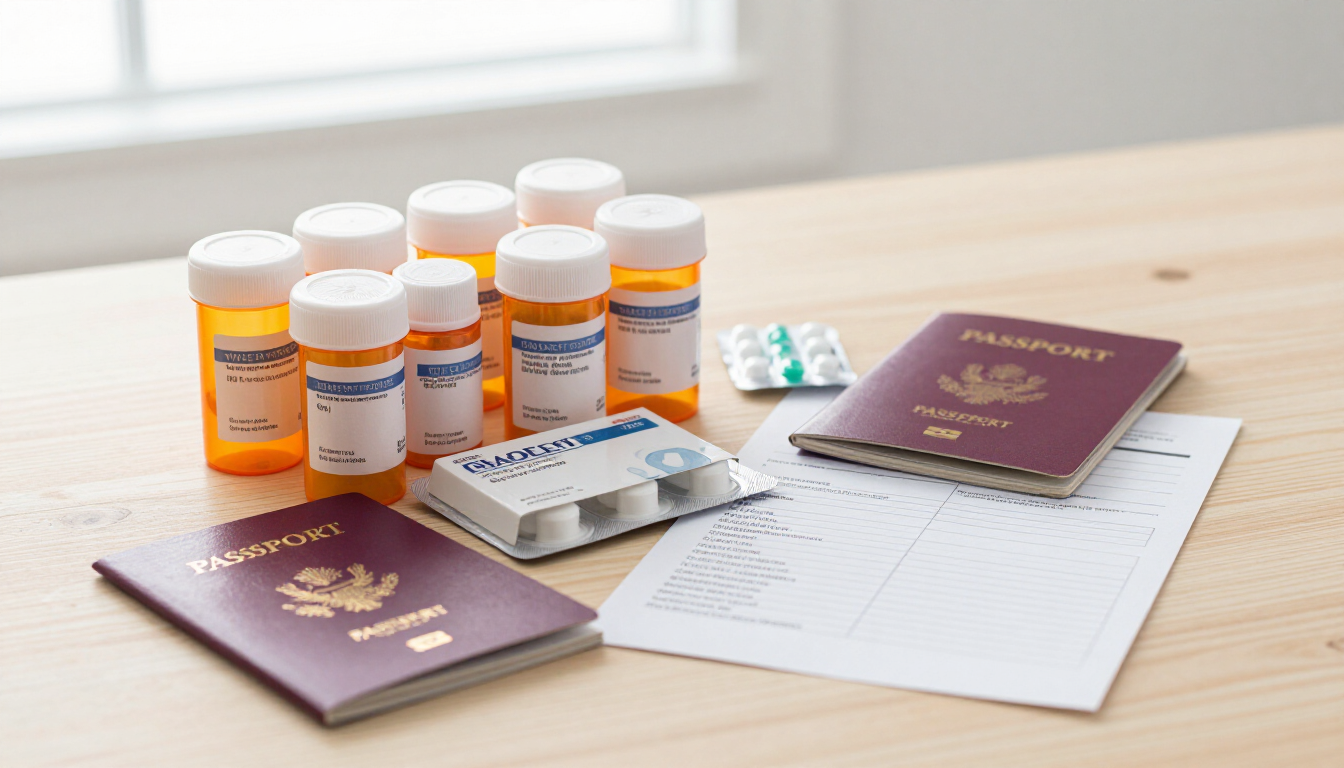
A traveler's guide to cruise medical centers, carrying prescription medication, refrigerated storage, mobility requests, seasickness preparation, and emergency contacts — with a pre-cruise health checklist
A little health preparation before you sail prevents most medical stress on a cruise. After more than 80 personal cruises, Cindy and I have helped travelers handle everything from a forgotten prescription to a genuine medical emergency at sea. This guide covers what you actually need to know as a traveler — how to carry medication, what cruise medical centers handle, how to prepare for seasickness, and what to do in an emergency. It is general travel information, not medical advice; always consult your own doctor or pharmacist about your specific health needs before you sail. For a deep dive on medical-center costs, Medicare limitations, and travel insurance, see our cruise ship medical centers and costs guide.
What Cruise Medical Centers Commonly Handle
Every major cruise ship has a medical center staffed with licensed physicians and nurses, available around the clock for emergencies and during set clinic hours for non-urgent visits. They commonly handle seasickness, minor cuts and burns, gastrointestinal illness, respiratory infections, ear infections, allergic reactions, sprains, and dehydration. For serious events — heart attacks, strokes, severe trauma — the medical team stabilizes the patient and coordinates evacuation to a shoreside hospital.
Cruise medical centers are not full hospitals. They do not perform major surgery, do not offer specialist care, and most lines restrict travel beyond a certain point in pregnancy. Knowing this in advance helps you set realistic expectations: the medical center is excellent for stabilization and routine issues, but a true emergency means evacuation to a land hospital.
Medical-Center Charges and Travel-Insurance Considerations
Ship medical care is billed at private-pay rates and charged to your onboard account — there is no insurance billing at sea, and most US health insurance (including Original Medicare) does not cover care outside the United States. You pay the ship and then file a claim with your travel insurance afterward. This is why a comprehensive travel insurance policy with medical and evacuation coverage is the single most important protection for an international cruise.
A full breakdown of typical medical-center charges, Medicare limitations, and what to look for in a policy is in our <a href="/cruise-guides/cruise-ship-medical-centers-costs/" class="text-gold hover:text-gold/80 underline underline-offset-2 transition-colors">cruise ship medical centers and costs guide</a>. The short version: carry your insurance policy number and the insurer's 24/7 emergency assistance number in your phone and wallet, and save every receipt if you visit the medical center.
Carrying Prescription Medication
The single most important medication rule for a cruise: bring enough of every prescription medication to last the entire sailing plus a buffer for travel delays, and keep it in your carry-on, never in a checked bag. Ship medical centers stock common medications for new illnesses but generally do not carry every drug or ongoing chronic-condition prescriptions, so you cannot count on refilling a regular prescription aboard.
Pack all prescription medications in their original pharmacy-labeled containers, and bring a copy of your prescriptions plus a doctor's note for any controlled substances. If you use a CPAP machine, insulin, or other medical device, bring extra supplies and confirm power compatibility with your cruise line in advance. A medication schedule written down on paper is a smart backup in case your phone dies.
Original Containers and Copies of Prescriptions
Original labeled containers matter for two reasons. First, customs and security officials in port countries can ask to verify that a medication matches the person carrying it, and a labeled bottle makes that straightforward. Second, if you need a replacement or a doctor at the medical center needs to confirm your regimen, the label tells them exactly what you take. Carry a printed copy of your prescriptions (or clear photos on your phone) and a brief list of your medications, doses, and any allergies.
Refrigerated Medication Planning
If a medication requires refrigeration — certain insulins, some biologics, and a few other drugs — plan ahead. Most cruise cabins have a small minibar fridge, but not all are cold enough for medication storage, and some lines classify the minibar as a beverage cooler rather than a medical-grade refrigerator. Before you sail, contact your cruise line's special needs or accessibility department to request a medical refrigerator in your cabin or confirm that the minibar will hold a consistent medication-safe temperature.
For the journey to the ship, use a validated travel cooler with cold packs and a thermometer to keep the medication in its required temperature range through flights and transfers. Bring more cold packs than you think you need, and ask your pharmacist about travel storage for your specific medication, since storage requirements vary by drug.
Mobility or Accessibility Requests
If you use a wheelchair, scooter, walker, or have any mobility or accessibility need, contact your cruise line's accessibility or special needs department before you sail — ideally at booking. Cruise lines can arrange accessible cabins, boarding assistance, wheelchair transfers, and equipment rentals, but these are subject to availability and require advance notice. Bring any mobility device you rely on, and confirm that your cabin is designated accessible if you need it.
A few practical notes from our experience: accessible cabins are limited and book up early; tender ports (where a small boat ferries you ashore) can be difficult or impossible for some mobility devices, so check which ports on your itinerary are tender ports; and travel insurance that covers medical equipment and evacuation is especially important for travelers with mobility needs.
Seasickness Preparation
Seasickness is the most common reason travelers visit the ship's medical center, and it is also the most preventable. Modern large ships have stabilizers and most passengers feel little motion, but some itineraries and weather conditions produce more movement than others. If you are concerned, choose a midship cabin on a lower deck (where motion is least), and talk to your doctor or pharmacist about prevention options before you sail — over-the-counter remedies, prescription patches, and acupressure bands all work for different people.
Bring your preferred seasickness remedy in your carry-on so it is available from the moment you board, and start prevention before you feel symptoms rather than after. If you do become ill, the medical center can administer stronger medication, but a little preparation avoids that visit entirely. This is general information, not medical advice — discuss the right option for you with a healthcare professional.
Medical Evacuation Basics
In a serious emergency, the medical team stabilizes the patient and the ship's emergency coordination center arranges evacuation to the nearest appropriate shoreside hospital. Depending on location, that may mean transport at the next port or an air-ambulance evacuation from the ship — and an air evacuation can cost tens of thousands to over a hundred thousand dollars without insurance. This is why evacuation coverage is the most important part of cruise travel insurance, and why we recommend a policy with high evacuation limits for any international sailing.
If an evacuation occurs, your travel insurance's 24/7 assistance team typically coordinates with the ship and the receiving hospital. Keep your policy number and the assistance number with you, and make sure your traveling companion knows where to find them too.
Emergency Contacts
Before you sail, assemble a small emergency contact sheet (paper and digital) with the following: your travel insurance policy number and 24/7 assistance number; your primary doctor's contact information; a list of your medications, doses, and allergies; an emergency contact at home; and the cruise line's emergency assistance number, which is usually printed on your cruise card and in the cruise app. Carry this in your carry-on and your wallet, and share it with your traveling companion.