When Should You Book Your Cruise? Insider Timing Tips to Save Money
Wave season, last-minute deals, holiday sailings, and the pricing patterns that experienced travelers use to get the most out of their cruise budget
Wave season, last-minute deals, holiday sailings, and the pricing patterns that experienced travelers use to get the most out of their cruise budget
One of the most common questions we get from travelers who are new to cruising — and from experienced cruisers who suspect they're not timing things optimally — is "when should I actually book?" The answer depends on where you're going, when you want to sail, and whether your priority is the lowest possible fare, the best cabin selection, or the most included perks. After 80+ personal sailings and years of booking travel for us and family, here's what we've learned about how cruise pricing actually works.
How Cruise Pricing Works (The Short Version)
Cruise lines use yield management — the same dynamic pricing model used by airlines. Prices start at a certain level when a sailing first opens (typically 18–24 months before departure), fluctuate based on how quickly cabins are selling, and generally rise as the ship fills up and the sailing date approaches. The best price is not always at the beginning, and it's almost never at the end — but the best cabin selection almost always is at the beginning.
The other piece of the pricing puzzle is promotions. Cruise lines run sales events throughout the year — wave season, flash sales, early booking bonuses, and seasonal promotions — that add value in the form of onboard credit, free gratuities, beverage packages, or fare reductions. Knowing when these promotions happen and what they actually include is where experienced travelers (and good travel advisors) have an edge.
Wave Season: The Most Important Booking Window
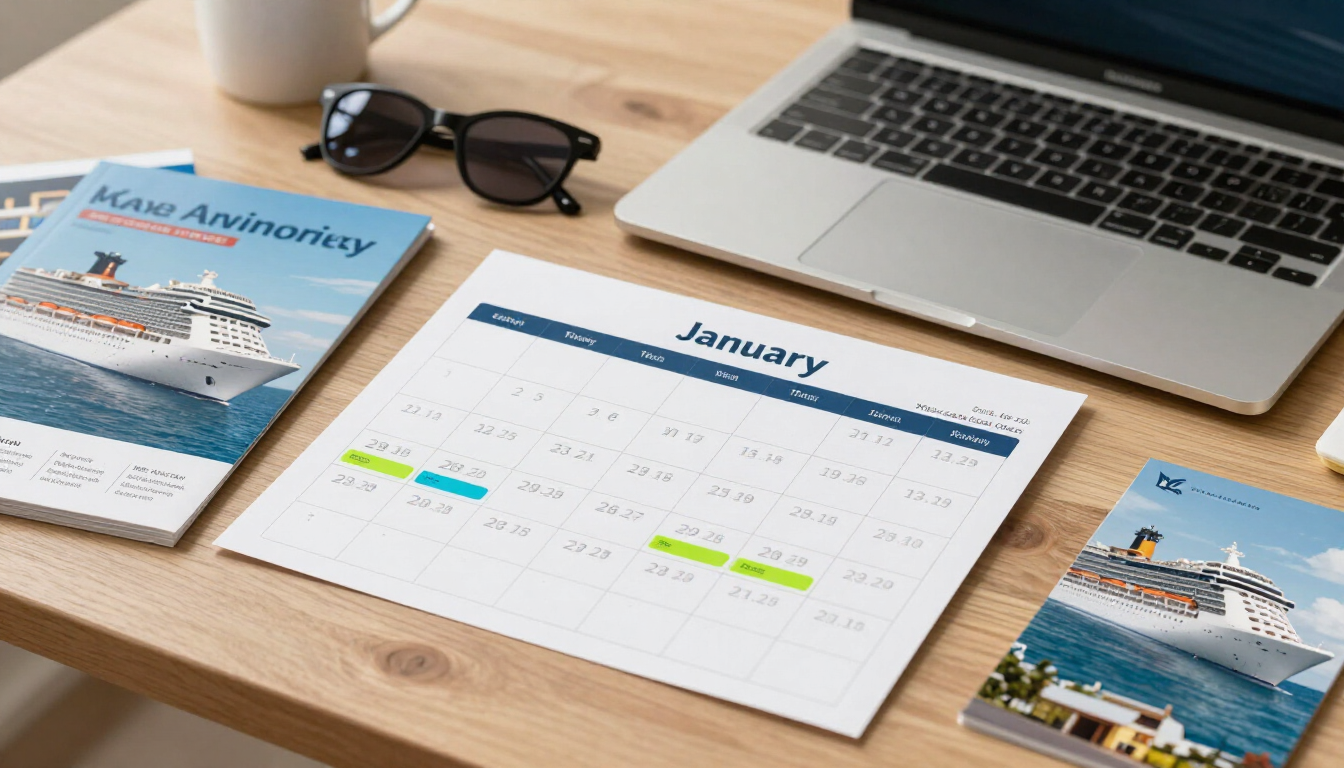
Wave season runs from roughly January through March and represents the single best concentration of cruise deals in the calendar year. Nearly every major cruise line — Carnival, Royal Caribbean, Norwegian, MSC, Celebrity, Princess, Holland America — runs their biggest promotions of the year during this window.
Wave season deals typically include some combination of: free gratuities (saving $252–$350+ per couple on a 7-night sailing), complimentary beverage packages (saving $100–$150 per person), onboard credit ($50–$300 per cabin), third or fourth guests sail free, free specialty dining packages, and reduced deposits. These are not trivial perks — they can add $500–$1,500 or more in included value to a booking that costs the same as the non-sale fare.
The key to wave season: you need to know what sailings you want before January so you can act quickly when deals drop. The best promotions sell out fast, and the best cabins within those promotions sell out even faster. We reach out to every client we work with in December to discuss their 2025 and 2026 plans precisely so they're positioned to move during wave season.
Booking by Destination: Timing Varies Significantly
The Caribbean sails year-round, which means the booking timing strategy depends heavily on when you want to travel. For peak winter season (December through April), booking 9 to 12 months in advance gives the best selection at the lowest prices. For shoulder season (May through June), you can often wait until 4 to 6 months out and still find good deals. Hurricane season sailings (July through October) sometimes see significant last-minute discounts as the sailing date approaches — but the best cabins are gone, and the weather risk is real.
Alaska season runs May through September, and it's one of the most popular and capacity-constrained cruise markets there is. The best sailings — peak Glacier Bay access, prime wildlife season, the most popular departure ports — sell out early. We recommend booking Alaska 12 months in advance, and never later than 9 months out if you have specific ship or itinerary requirements. Alaska is the destination where we most often have to tell clients "that sailing is full" — and I genuinely hate making that call.
European cruise season runs April through October, with peak demand in June through August. The best itineraries — Greek Isles with Santorini and Mykonos, the Italian coastline with Rome and Florence, the Norwegian fjords — fill quickly. Book 10 to 12 months in advance for summer sailings. Shoulder season European sailings (May, September, October) offer good weather with better availability and pricing, and can often be booked 6 to 9 months out.
Christmas and New Year's cruises are in a category of their own. They're the single hardest-to-book sailings in the entire industry, and prices reflect that scarcity. If you want to cruise over the holidays, you need to book 12 to 18 months in advance — or be prepared to pay significantly more for what's left. Spring break sailings (March–April) are similarly competitive; book 9 to 12 months early.
Last-Minute Cruise Deals: When They Work and When They Don't
Last-minute cruise deals are real — cruise lines would rather sell a cabin at a discount than sail with it empty — but they come with significant caveats. By 30 to 60 days before departure, the best cabin categories are sold out. You're choosing from what's left, which may mean an inside cabin when you wanted a balcony, or a poor location when midship is gone. Last-minute deals work best for flexible solo travelers or couples who don't have specific cabin requirements and can travel on short notice.
Airlines complicate the last-minute strategy further. The cheap cruise deal you found 45 days before sailing may be offset by the expensive last-minute flight. The total trip cost, not just the cruise fare, is what matters.
Black Friday and Cyber Monday Cruise Sales
Nearly every major cruise line runs Black Friday and Cyber Monday promotions in November. These sales are real and often offer meaningful savings or added value. The best approach is to decide in October which sailings you're targeting, then check prices November 1st (your benchmark) and move quickly when the Black Friday deal drops. Don't wait for Cyber Monday — the best cabin categories often sell out over the weekend.
Repositioning Cruises: The Best Deal in Cruising
Repositioning cruises happen when cruise lines move ships between homeport regions — typically in spring (repositioning to Europe/Alaska) and fall (repositioning back to the Caribbean or Florida). These trans-ocean sailings are some of the best-priced itineraries in the industry because they're one-way (requiring a flight at one end) and longer than typical sailings (7–14 nights). The value for the price is extraordinary, and the experience — multiple consecutive sea days crossing the Atlantic or the Pacific — is something serious cruisers seek out specifically.
The Price Watch Strategy
The best booking strategy isn't book-early-and-forget-it. It's book-early-and-watch-for-a-better-deal. Cruise lines frequently adjust pricing after initial booking, and in many cases you can take advantage of a price drop or a new promotion after you've already booked. This is called "re-faring" and it's standard practice — but you have to catch the promotion window and move quickly. A good travel advisor does this monitoring for you.
The catch: once you're inside final payment (typically 90 days before sailing), most cruise lines won't allow re-faring. Make sure any pricing changes happen before that deadline.
Deposit Strategies
Most cruise lines allow you to book with a deposit of $100–$500 per person, with the balance due 60–90 days before sailing. This means you can lock in a cabin and a price far in advance without paying the full fare upfront. Refundable deposits cost slightly more than non-refundable, but give you the flexibility to cancel if plans change — meaningful if you're booking 12+ months out. For wave season bookings especially, we generally recommend refundable deposits so you retain the flexibility to re-evaluate.